

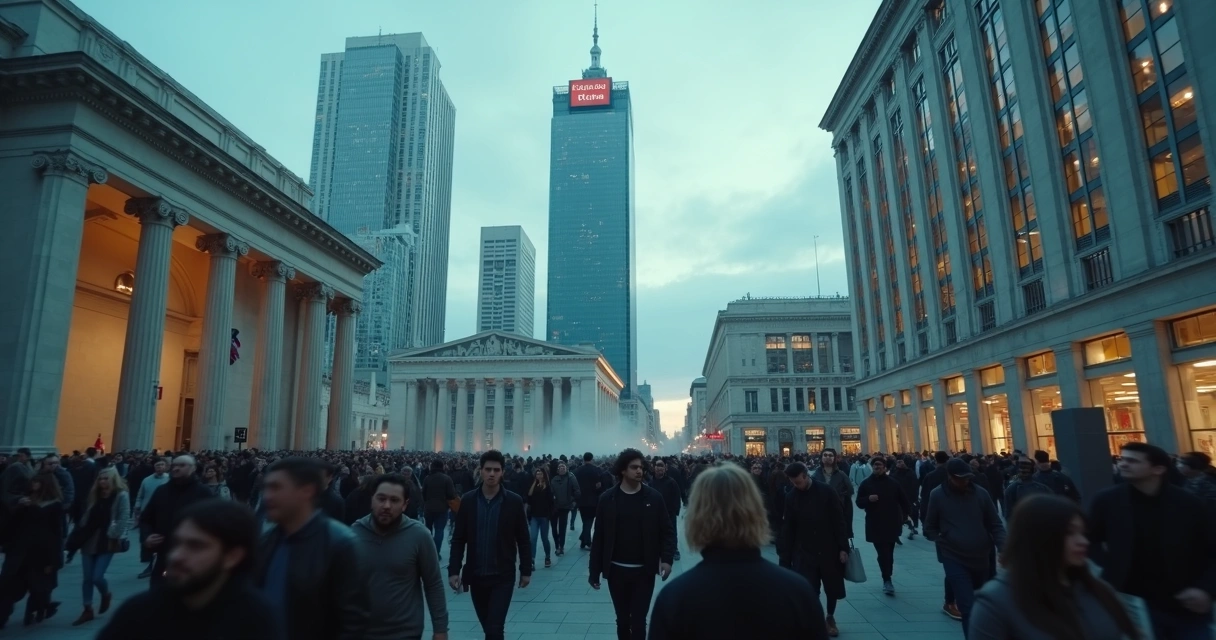
We often imagine anxiety as a private struggle—tucked away in a racing heart or restless mind. Yet, when anxiety spreads through whole groups, communities, or even nations, it quietly shapes our most stable-looking structures. In our view, understanding how collective anxiety weaves itself into social institutions is more than a psychological interest. It's a key to understanding how societies organize themselves, function, and sometimes begin to unravel.
The roots of collective anxiety
Anxiety exists on a spectrum. Individually, it can sound like a concerned parent, a sleepless worker, a student uncertain before an exam. On a collective level, it’s harder to spot. It manifests in trends, in shared worries, and in what is left unsaid. We notice its roots in:
- Rapid change without shared meaning
- Unresolved social traumas
- Unpredictable economic or political climates
- Lack of trust in leadership or systems
- Breakdown in communication and connection
When these roots take hold in a group, anxiety starts to change the way people interact—not just as individuals, but as a scared collective mind.
Social institutions: Mirrors of our collective state
Social institutions—like schools, healthcare, government, or businesses—are not fixed. We see them as living systems. When collective anxiety rises, these institutions begin to mirror it, often unconsciously. If society is worried, cautious, expecting crisis, these feelings filter into how rules are written and how people behave inside formal structures.

We think of institutions as buildings or policies, but they are really made of people acting together. Social institutions absorb and amplify shared anxiety in several ways:
- Procedural Overcontrol: More rules, more bureaucracy, less room for creativity
- Defensive Communication: Avoidance, blame, or a focus on image over honesty
- Collective Forgetting: Avoiding topics that feel scary, such as past errors or future risks
- Pessimism in Vision: Strategy and planning focused on limitation, not possibility
Anxious institutions try to keep risks out, but can end up keeping growth out too.
The ripple effect: From individual feelings to institutional behavior
How does an anxious mood leap from a person to an entire board, classroom, or government office? As we have observed, it happens step by step. One person’s tension adds to another’s. Over time, this becomes a group’s “way of being,” a low hum of alertness that shapes choices, communication, and leadership styles.
This ripple effect is rarely planned, but it is very real. Institutions then act not from clear collective wisdom, but a shared nervousness that distorts priorities and decisions.
- Decision-making slows down as fear of mistakes overshadows action
- Blame culture can take root—mistakes spark suspicion, not learning
- Creativity is stifled, as taking risks feels unsafe
We hear stories in the news about “gridlock,” “mistrust,” or “stagnation.” Often, these words are simply different names for anxiety, expressed collectively. When we think about it, we realize that unresolved collective feelings drive more than private pain—they shape how institutions serve (or fail) society.
Examples of collective anxiety in action
It helps to notice how this works in daily life. Consider a school facing continual reforms, always told to “adapt faster.” Over time, teachers and administrators may lose trust in plans, focusing only on avoiding mistakes, rather than inspiring students.
Or take a hospital under public scrutiny for resources and wait times. Staff begin fearing complaints more than helping patients, slowing down care and building even more public anxiety.

Government institutions are not immune. Faced with unstable economies, public servants may prioritize self-protection over public service. Policy debates become hostile. Each new challenge is met with more rules, fewer conversations, and a fading memory of shared purpose.
In anxious systems, trust fades and fear writes the rules.
How collective anxiety changes cultures inside institutions
Culture is often silent. We say “that’s just how things are done here.” But when anxiety moves in, it changes what people believe is possible. We observe that:
- Cynicism increases. People expect failure and disappointment.
- Silence replaces dialogue. Fewer people speak up, even if they have good ideas.
- Short-term thinking dominates. People seek quick fixes or simply avoid problems.
- Social distance grows. People feel less connected to each other and to a shared vision.
An anxious institution is not just less effective—it also becomes less human.
Can collective anxiety be transformed?
Yes, but first it must be acknowledged. We cannot change what we don’t see. In our experience, collective anxiety can be transformed when institutions:
- Open honest communication about uncertainty and fear
- Revisit and renew shared purpose and meaning
- Encourage participation, not just compliance
- Foster psychological safety, where mistakes become learning
- Invest in leadership that is empathic and transparent
Transformation starts with courage to see and the willingness to heal.
We have seen that when institutions address anxiety directly, rather than hide from it, they rediscover both resilience and creativity. The choice is never just about reducing stress. It is about restoring the very foundation of trust, connection, and shared vision.
Conclusion
Collective anxiety is not abstract. It appears in the routines, cultures, and decisions inside social institutions every day. If we look closely, we see that anxiety is never just an individual problem. It is a signal of a system asking for attention, healing, and new meaning. By recognizing and addressing collective anxiety with honesty and responsibility, institutions can become places of growth, wisdom, and true social progress.
Frequently asked questions
What is collective anxiety in institutions?
Collective anxiety in institutions is the shared fear, worry, or tension that emerges among members of a group or organization, affecting communication, decision-making, and overall well-being. It is not limited to single individuals, but acts as a background mood that influences the whole system.
How does anxiety show in organizations?
Anxiety in organizations appears as increased rules, defensive communication, reluctance to try new ideas, slow decision-making, and a culture that avoids mistakes but also avoids growth. It can also show itself as lack of trust and increased conflict.
Why do social institutions develop anxiety?
Social institutions develop anxiety due to uncertainties, rapid changes without clear guidance, past traumas, economic or political unrest, and when there is a breakdown in trust and communication. These conditions create ongoing tension that spreads among members.
How can institutions reduce collective anxiety?
Institutions can reduce collective anxiety by improving communication, fostering psychological safety, rebuilding trust, encouraging open participation, and renewing a sense of shared purpose. Honest discussion of fears and uncertainties is a key step toward healing and transformation.
What are signs of anxious workplace culture?
Signs of an anxious workplace culture include frequent rule changes, blame-focused attitudes, avoidance of risk, limited innovation, silence during meetings, lack of trust among staff, and a sense that people are disconnected from the institution’s mission.